Serving Medieval Studies in the Delaware Valley since 1983

Category: Meetings Page 1 of 4

April 24, 2021 DVMA Sping Meeting at Bryn Athyn

Jackson Lecture in Byzantine Art: Alice Isabella Sullivan, “Eastern Europe in Focus: Medieval Art, Cultural Heritage, and Global Conflicts”

Friday, February 6, 2026, 4:30–6:00 PM EST
Hybrid: In-person at the Tyler School of Art and Architecture, Room Arch 104
Temple University, 2001 N. 13th Street, Philadelphia PA 19122
and virtual via Zoom (register here: https://temple.zoom.us/meeting/register/YEJDqOhrSdGUT4v7hktfUQ)
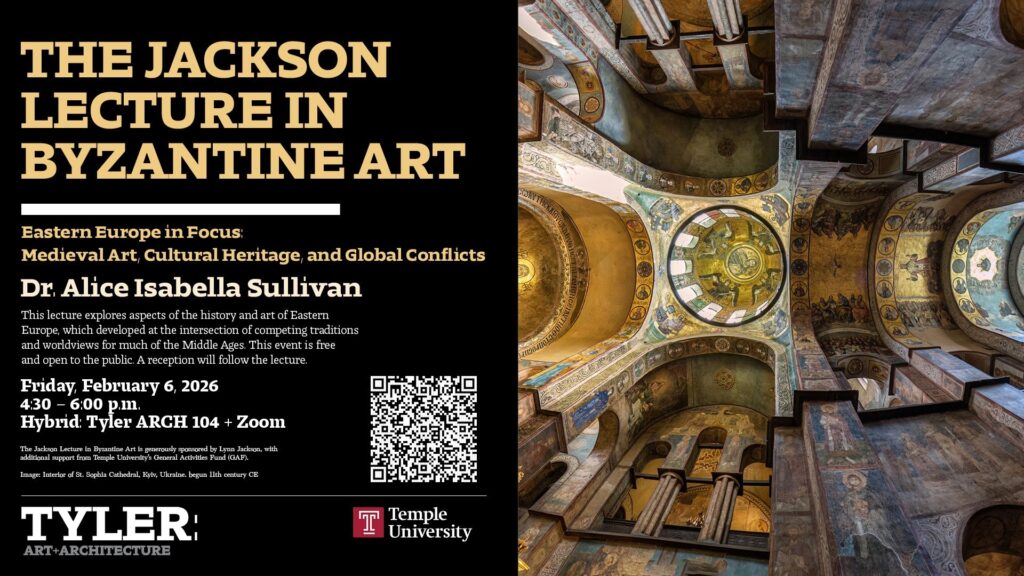
A reception will follow the lecture in person at the Tyler School of Art and Architecture, Temple University.

This lecture explores aspects of the history and art of Eastern Europe, which developed at the intersection of competing traditions and worldviews for much of the Middle Ages. Byzantium played a key role in shaping local artistic developments in regions of the Balkan Peninsula, the Carpathian Mountains, and further north, as did contacts with Western and Central Europe. Key objects and monuments reflect aspects of local negotiations among competing traditions, and the shifting meanings and functions of cultural heritage during moments of change, crisis, and conflict. Examples from regions of modern Ukraine, Romania, and North Macedonia, among others, underscore the importance of putting Eastern Europe in focus temporally, geographically, methodologically, and theoretically within the study of medieval, Byzantine, post-Byzantine, and early modern art history.

Alice Isabella Sullivan, PhD, is Assistant Professor and Director of Graduate Studies in the Department of the History of Art and Architecture at Tufts University. She specializes in the artistic production of Eastern Europe and the Byzantine-Slavic cultural spheres in the period between the 14th and 16th centuries. Sullivan is the author of the award-winning book The Eclectic Visual Culture of Medieval Moldavia (2023), Europe’s Eastern Christian Frontier (2024), and co-editor of several volumes. In addition, she is co-director of the Sinai Digital Archive, and co-founder of North of Byzantium and Map­ping Eastern Europe— two initiatives that explore the history, art, and culture of the northern frontiers of the Byzantine Empire in Eastern Europe during the medieval and early modern periods.

The event is free and open to the public. The Jackson Lecture in Byzantine Art is generously sponsored by Lynn Jackson, with additional support from Temple University’s General Activities Fund (GAF).
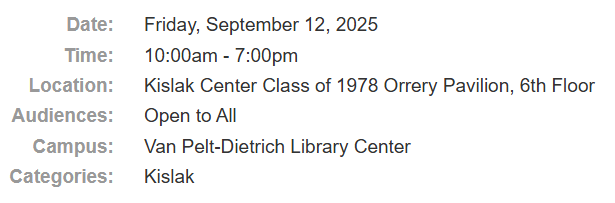
Making the Medieval Archive: Celebrating Elizabeth A. R. Brown at Penn

Sticky post

This day-long symposium will commemorate Elizabeth (Peggy) A. R. Brown’s extraordinary legacy in the field of Medieval Studies and will mark the official launch of the Elizabeth A. R. Brown Medieval Historians’ archive. For more details and the event program, click here.

Co-organized by Nicholas Herman (Kislak/SIMS) and Ada Kuskowski (Department of History).

Register here

A photograph of Elizabeth (Peggy) A. R. Brown conducting research early in her career. Source: Brown family

“Paths of Faith: Fourteenth Century Mediterranean Encyclopedism”, Uri Zvi Shachar

Sticky post

Uri Shachar teaches in the Department of History at Ben-Gurion University of the Negev, where he is also a member in the Center for the Study of Conversion and Inter-Religious Encounters. The current year he is spending at the Institute for Advanced Study in Princeton working toward his second monograph, provisionally entitled The Fountain of All Knowledge: A Mediterranean Epistemology of Vernacular French.

“Iberia and the Multilingual Mediterranean”, Michelle Hamilton and Núria Silleras-Fernández

Sticky post

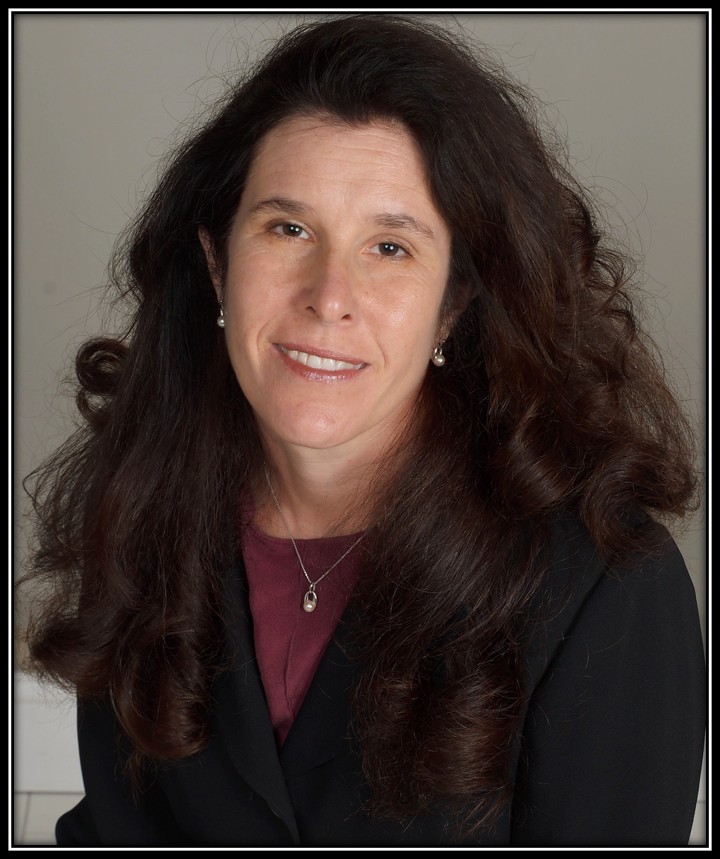
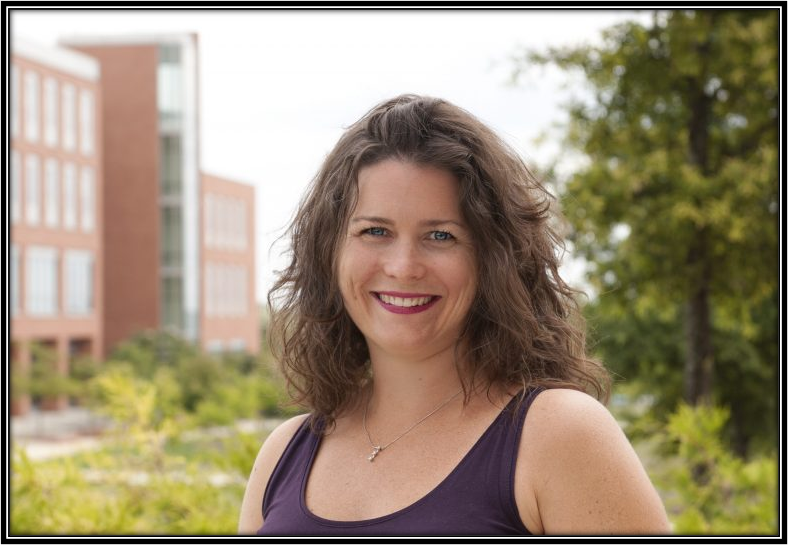
Michelle M. Hamilton is Director of Premodern Studies and Professor of Spanish and Portuguese at the University of Minnesota, Twin Cities where she offers courses on religious studies, Jewish studies, and Spanish literature and culture. She is also the Editor of La corónica: A journal of Medieval Hispanic Languages, Literatures, and Cultures. She has published widely on multi-confessional Iberia. Publications include: Islam and the Arabs in Spanish Scholarship (16th Century to the Present) (Harvard 2021);  The Study of al-Andalus: The Scholarship and Legacy of James T. Monroe  (Harvard 2018); Beyond Faith: Belief, Morality and Memory in a Fifteenth-Century Judeo-Iberian Manuscript (Brill 2014) and In and Of the Mediterranean: Medieval and Early Modern Iberian Studies (Vanderbilt 2014). 

z

Michelle M. Hamilton

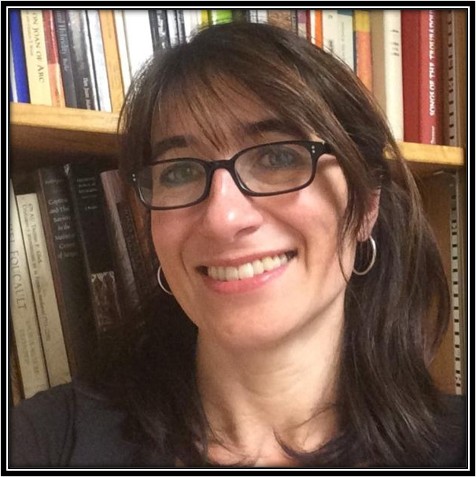
Núria Silleras-Fernández is a Professor at the Department of Spanish and Portuguese at the University of Colorado-Boulder and affiliated faculty in the Humanities Program. Her research focuses on cultural and intellectual history, gender, and literature in Medieval and Early Modern Iberia, Europe, and the Mediterranean. She is the author of three scholarly monographs, Power, Piety, and Patronage in Late Medieval Queenship: Maria de Luna (Palgrave: 2008 and in Spanish CSIC: 2012); Chariots of Ladies: Francesc Eiximenis and the Court Culture of Medieval and Early Modern Iberia (Cornell UP: 2015), and The Politics of Emotion: Love, Grief, and Madness in Medieval and Early Modern Iberia (Cornell UP: 2024). She is currently working on two book projects; one relates to gender, marriage, sexuality, and emotions, and the other one to cultural capitals, exchange, polyglossia, patronage, translation, and gender.

Núria Silleras-Fernández

“A Refugee Family across Syria and North Africa: Artistic Heritage and Communal Self-Memory”, Ariel Fein

Sticky post

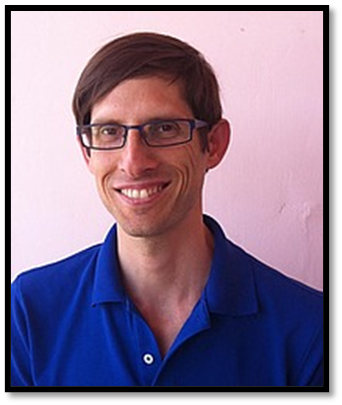
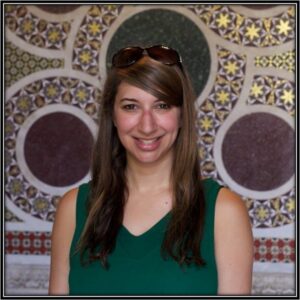
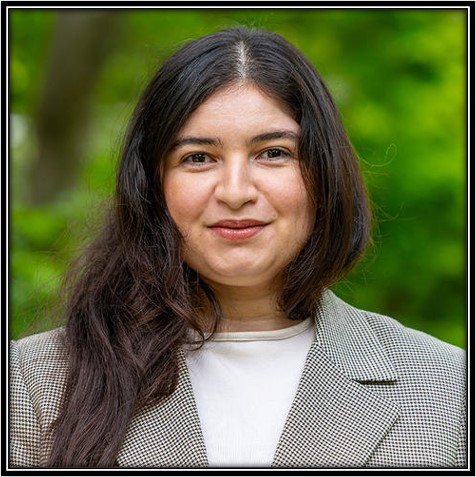
Ariel Fein studies the medieval visual cultures of Byzantium and the Islamic world. Her research focuses on intercultural artistic connections across the frontier zones of the medieval Mediterranean, with a particular interest in the arts of Norman Sicily and the Arab-Christian communities of medieval Egypt and Ifriqiya.

“Medieval Sephardic Narratives of Mediterranean Migration”, David Wacks

Sticky post

David Wacks is Professor of Spanish in the School of Global Studies and Languages’ Department of Romance Languages at the University of Oregon. He earned his PhD in Hispanic Languages and Literatures from UC Berkeley in 2003. In 2006 he was Harry Starr Fellow in Judaica at the Harvard Center for Jewish Studies. He is author of Framing Iberia: Frametales and Maqamat in Medieval Spain, (Brill, 2007), winner of the 2009 La corónica award, Double Diaspora in Sephardic Literature: Jewish Cultural Production before and after 1492 (Indiana University Press, 2015), winner of the 2015 National Jewish Book Award in the category of Sephardic Culture, and Medieval Iberian Crusade Fiction and the Mediterranean World (University of Toronto Press, 2019). His current book project, People of the Book: Jewish, Christian, and Muslim Retellings of the Hebrew Bible in Medieval Iberia, is under review at Oxford University Press. He blogs on his current research at http://davidwacks.uoregon.edu.

“What lies behind al-Tiǧānī’s travelogue (scr. post 711/1311)?”, Sébastien Garnier

Sticky post

Sébastien Garnier was educated at INALCO and EHESS (Paris), with additional trainings taken in foreign institutions. Agrégé in Arabic (2008) and Ph.D. in History (2019), he published in 2022 his Histoires hafsides by Brill. Specialized in the study of medieval Western Islam, he is a co-founding member of LibMed, an academic community actively working on premodern Libya. His research has shifted to “memories as local competitors”. Besides, he is supervising the forthcoming catalogue of the manuscripts kept at the National Library of Libya. Since 2023, he has become editor-in-chief for Journal of Islamic Manuscripts, a position he now shares with Prof. Arianna d’Ottone. 

“Moving in the Mediterranean: Public Women and Their Routes”, Susan McDonough

Sticky post

Susan McDonough, this year the George William Cotrell Jr member of the School of Historical Studies at the Institute for Advanced Studies in Princeton, is an Associate Professor of history at UMBC. A scholar of women, gender and sexuality in the medieval Mediterranean, Susan is currently at work on two projects: one is solo-authored monograph on sex workers, the other, a collaboration with Michelle Armstrong-Partida of Emory University, began with Mediterranean singlewomen and has grown to include single men, migration, shared cultures of sexuality, and gender identity. Her work has been supported by fellowships with the NEH and the Newberry Library.  

Register for the Symposium Webinar, “Medieval Mediterranean Ways”, Friday April 11!

The topic of this virtual symposium, Medieval Mediterranean Ways, is conceptualized very broadly geographically as well as intellectually, and it seeks to examine both meanings of the word “ways”, as direction and as manner. Our articulation alludes to both Mediterranean ways as routes or directions as well as ways as manners, customs and cultural practices. Thus, this symposium aims at engaging in an intellectual dialogue that widely encompasses areas of inquiry as varied as trade, cartography, visual cultures and intercultural and interreligious relationships across the Mediterranean during the medieval period. 

(CLICK HERE TO REGISTER!)

MEDIEVAL MEDITERRANEAN WAYS SYMPOSIUM PROGRAM

MORNING SESSION. 10:00 am-12:00 pm 

  • 10:00 am-10:30 am (EST) Susan McDonough, Univ. of Maryland, Baltimore County, Medieval History, “Moving in the Mediterranean: Public Women and Their Routes” 
  • 10:30 am-11:00 am (EST) Sébastien Garnier, Université Paris 1, “What lies behind al-Tiǧānī’s travelogue (scr. post 711/1311)?” 
  • 11:00 am-11:30 am (EST) David Wacks, Univ. of Oregon, Sephardic Studies , “Medieval Sephardic Narratives of Mediterranean Migration” 
  • 11:30 am-12:00 pm (EST) Q&A 

12:00 pm-1:00 pm (EST) Lunch Break 

AFTERNOON SESSION. 1:00 pm-3:00 pm 

  • 1:00 pm-1:30 pm (EST) Ariel Fein, Institute for Advanced Studies, Princeton, Byzantine and Islamic Art History, “A Refugee Family across Syria and North Africa: Artistic Heritage and Communal Self-Memory” 
  • 1:30 pm-2:00 pm (EST) Michelle Hamilton, University of Minnesota, and Núria Silleras-Fernández, University of Colorado , “Iberia and the Multilingual Mediterranean” 
  • 2:00 pm-2:30 pm (EST)  Uri Zvi Shachar, Ben-Gurion University of the Negev, “Paths of Faith: Fourteenth Century Mediterranean Encyclopedism” 
  • 2:30 pm-3:00 pm (EST), Q&A and Closing Remarks 
Registration Linkhttps://temple.zoom.us/webinar/register/WN_JzgTXT6OSGuhx8Lw9pCwXw#/registration
VenueZoom Webinar
StartsFri Apr 11 2025, 10:00 AM EDT
EndsFri Apr 11 2025, 3:00 PM EDT

DVMA Spring Meeting – April 19, 2024 – Rare Book Department, Free Library of Philadelphia

DVMA Spring 2024 Meeting, Friday, April 19, 1:00 p.m – 5:00 p.m

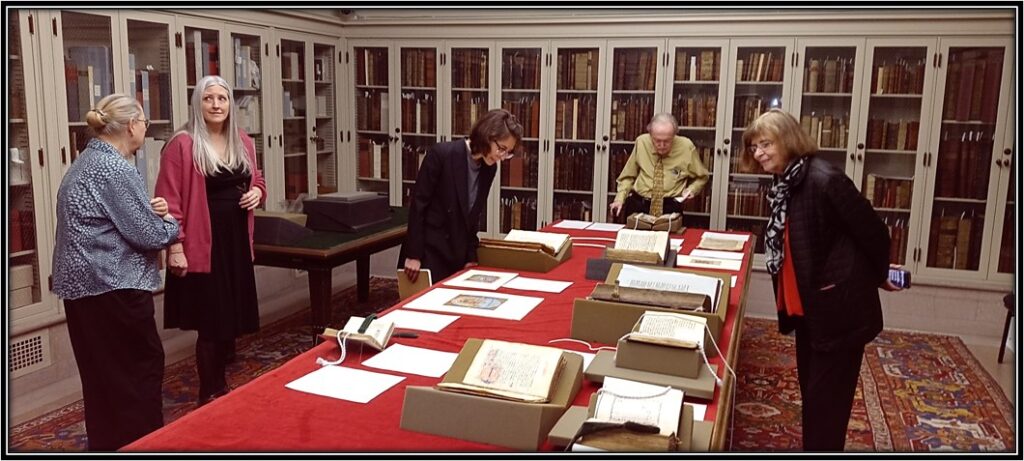
Please join us for the Delaware Valley Medieval Association’s Spring Meeting held in the William M. Elkins room at the Rare Book Department of the Free Library of Philadelphia (1901 Vine Street, Philadelphia, PA 19103). The event features three engaging speakers on topics of special interest to medievalists and includes a viewing of the manuscripts on exhibit. 

PROGRAM

1:00 p.m. – 1:15 p.m.   

Welcome and Introduction. Professor Montserrat Piera, Temple University

1:15 p.m. – 2:00 p.m.

Renate Blumenfeld-Kosinski, Professor Emerita, Department of French and Italian, University of Pittsburgh

“Making Miracles in late Medieval France: Three Saints and Would-be Saints”

2:00 p.m. – 2:45 p.m.

Roxanna Cosme-Colon, Visiting Assistant Professor, Department of Spanish, Haverford College

“The Matter of Iberia: Fashioning the Legendary Carolingian Corpus for Iberian Popular Audiences”

“The Matter of Iberia: Fashioning the Legendary Carolingian Corpus for Iberian Popular Audiences”

2:45 p.m. – 3:30 p.m

Break

Refreshments

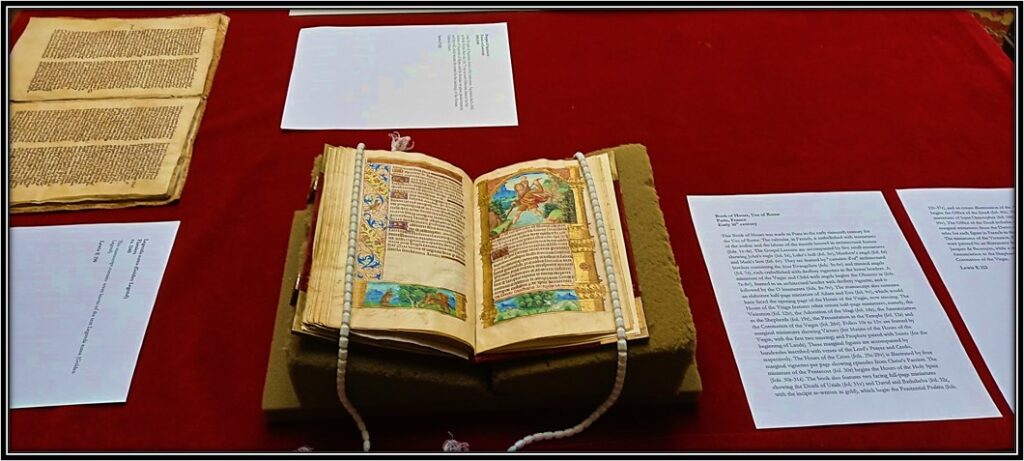
Viewing of Manuscripts Exhibit at the Rare Book Department

3:30 p.m. –  4:30 p.m. 

Martha Easton, Associate Professor of Art History and Program Director, Museum Studies, Department of Art and Art History, Saint Joseph’s University

“Medieval Architectural Salvage in American Collections”

4:30 p.m.- 5:00 p.m.

Discussion and Closing Remarks

Registration is $10 for DVMA members, $15 for guests. Graduate students should register but attend at no cost (use code DVMA24GS at registration checkout). Payment can be made during web-registration or at the door.

Page 1 of 4

Powered by WordPress & Theme by Anders Norén